Do Race Day Nerves Ever Go Away?
This blog post comes from an email I sent to my subscribers’ list in February 2026. If you want more content like this, then be sure to subscribe to my email list here.

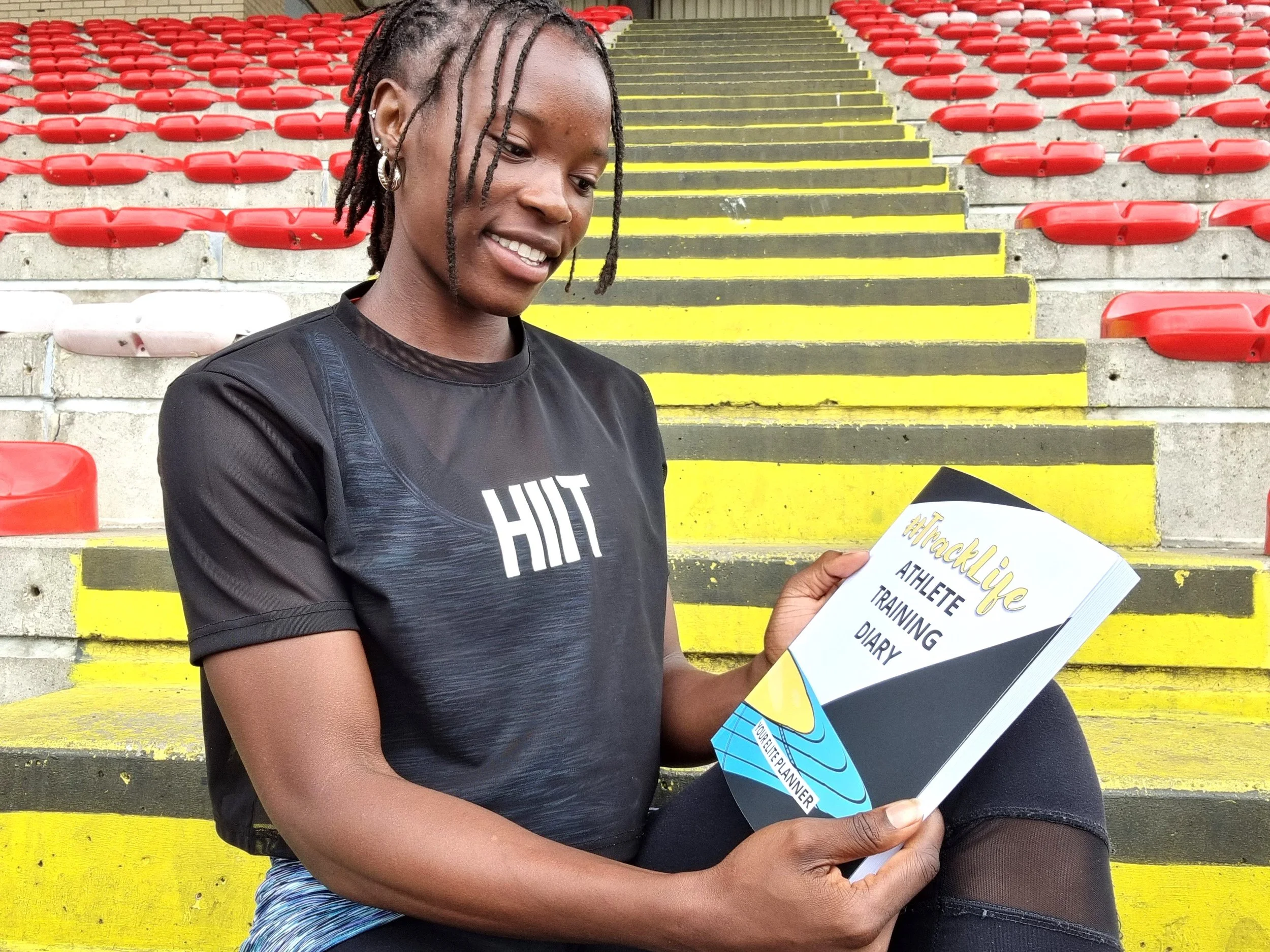
Photo Credit: Liss G Photography
Listen to the audio version 👇🏾
Last night, one of my athletes asked me a really great question, so I thought I’d share my answer with you.
QUESTION: Do you ever get to the point where you stop feeling nervous for a race?
Now, whilst I can’t speak for every athlete in the world, I’m going to speak from 24 years of experience in the sport, where I’ve had the privilege of medalling for my country at an international level; as well as the opportunity to train with world-class athletes and elite coaches…
In general, you may not necessarily stop feeling nervous altogether (because at the end of the day, nerves show you care, and that you want to do well). However, you learn to control those nerves, and they stop controlling you. You learn to use the adrenaline to enter FIGHT mode, rather than FLIGHT mode.
Here are 3 things that happen as you mature in your athletic journey:
1 - As you gain more experience, there are fewer unknowns.
When you first begin the sport and start to compete, EVERYTHING is new, and because you don’t know what to expect, it can feel scary, or even overwhelming. It’s this unknown that can make us feel nervous.
This is why you tend to have more nerves for that first race of the season… because it’s the first time you’re “officially” testing out where you’re at (and usually after some months without racing).
Having some ways to test yourself in training can help eliminate some of the unknown. That’s why doing some competitive runs with other training partners or another group (if you train alone), in training, and before race day, is a good idea.
The more you race, the more you start to recognise the factors you can control on competition day. The more you race you recognise the things that remain the same from race to race. It’s this element of “knowing” that helps eliminate some of those beginner nerves.
This is exactly why I suggest having a warm-up routine and a race-day plan, as familiarity can help you feel in control of your day, eliminating potential stress.
2 - You use data to inform your confidence.
It’s one thing to “want” to do well. It’s another thing to “know” you’re going to do well. When you know you’re going to do well, you show up differently.
Whilst there may be adrenaline (or “nerves”), it’s more an excitement to show what you can do, to demonstrate your form, or to prove to yourself what you already know.
You can only get this “knowing” when you have the data to back you up.
What is this data, and where does it come from?
It comes from knowing you’ve shown up and given your all in training.
It comes from injury-free periods of solid training (often, those injuries affect us mentally more than they do physically)
It comes from consistent execution in training (perfect practice makes permanent, not just practice).
It comes from the electronically timed PB runs in training, those PBs in your plyometrics/jumps, those PBs in the gym.
It comes from the previous races you’ve run that season.
If you’re not measuring your progress, you won’t get this sort of data. If you’re doing half-hearted reps and not seeing times/distances that allow you to already “know” what you can do when it’s competition time, you won’t have this confidence going into a race.
If you want an affordable but accurate way to time yourself in training, using your phone, check out the Photo Finish App. You can get 10% off using my code “Torema10PF”.
3 - You learn to FOCUS on the right things.
Doubt and negative thoughts cripple your sprinting ability more than you know. When you focus on what you can’t do or what you’re not sure about, it’s like kryptonite taking away your sprinting power.
As you mature as an athlete:
You stop focusing on other people in your race.
You stop focusing on the results.
You stop focusing on what you’re not good at or not sure of.
You stop making excuses and limiting decisions.
Instead:
You focus on yourself and your own lane.
You focus on the execution of your race (knowing fast times come naturally when you execute correctly).
You focus on your strengths.
You stop allowing unfavourable lanes, weather, equipment, or even heat draws to determine what you’re able to do (you recognise everyone in your race has the same conditions and you’re going to make the most of what you’ve got).
So, as I said, nerves/adrenaline may not disappear completely. However, they may appear for different reasons, and you learn to redirect them or shift them into something positive.
For me, confidence really does change the game. Yes, you can “fake it until you make it”, of course. But nothing beats that real, authentic confidence that comes with training, experience and attention to detail.
Yours on track,
Torema x
Know a friend who would benefit from this post? Why not share it with them?

About The Author: Torema Thompson is an athlete, author, qualified personal trainer and speed coach. She is passionate about helping athletes and fitness enthusiasts to master sprinting & fitness.
Connect with Torema on YouTube and Instagram, or subscribe to her email list to be notified about new blog posts.